Tuesday, June 24, 2014
Advocacy Group Targets New York Teacher Tenure and Seniority Laws

Literal-Minded Lawyers Accuse Chobani Yogurt of Not Being Greek
bankruptcy lawyer bankruptcy lawyers best attorney business law business lawyer
LawBiz® Legal Pad: Retainers- Do They Do Any Good For You?
Ed examines the complexities of retainers and discusses their use within the legal profession.

Source: http://feeds.lexblog.com/~r/LawBizBlog/~3/uUcsklaftuY/
Suit Alleges Dun & Bradstreet Fudged Reports To Sell Credit Repair Service
free lawyer consultation california free lawyers free legal advice free legal aid getting power of attorney
Roberta Gelb on Technology Training
IRS Commissioner Grilled Over Lost Lerner Emails
Source: http://blogs.wsj.com/law/2014/06/20/irs-commissioner-grilled-over-lost-lerner-emails/?mod=WSJBlog
getting power of attorney government lawyer green card lawyer immigration attorney immigration law
You Won’t Believe This “In To Jail” Smuggling Case
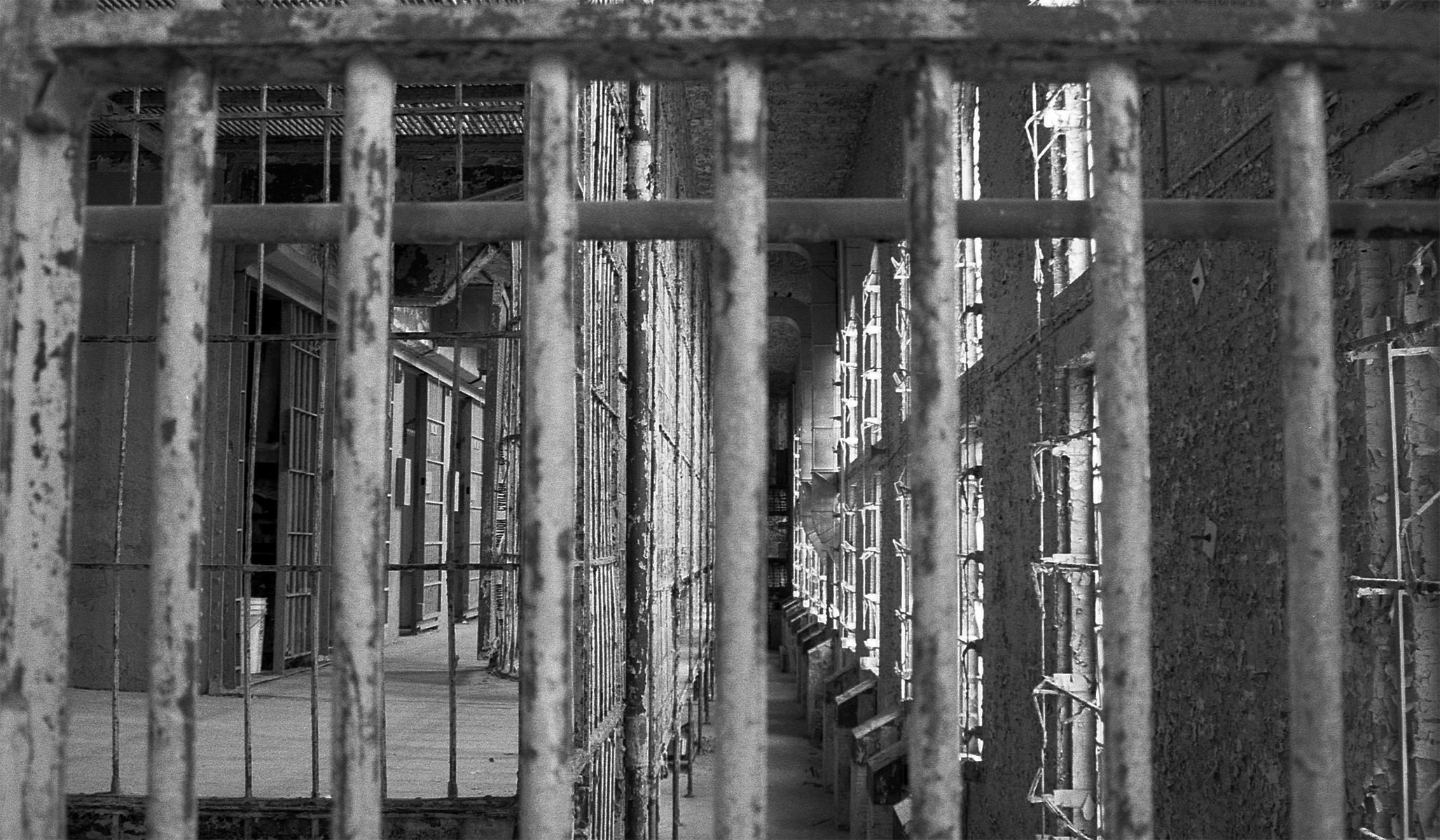
If you have ever doubted the highly addictive nature of crack, this body cavity smuggling story will disabuse of that notion. As reported by The Gainesville Sun:
A Gainesville woman is facing multiple drug charges after being arrested initially for possession of marijuana and drug paraphernalia and then, authorities say, trying to smuggle into the jail two crack pipes — one still loaded with crack — in a most uncomfortable fashion.
Let’s take it from the top.
Cynthia M. Scholes, 41, of 328 SW 34th St., Apt. 29, was a passenger in a car stopped just before midnight Wednesday in the 100 block of Williston Road for speeding, police reported.
Okay, a routine speeding stop …
After the driver consented to a search of the vehicle, police reported finding a cigar wrapper containing about 3 grams of marijuana in the passenger seat where Scholes was sitting. A further search of her purse revealed a crack pipe, police said.
So, not so routine after all.
As she was being taken to jail, Scholes was asked three times, police said, whether she had additional drugs in her possession, which she denied.
Define “possession.”
But as Scholes passed through an X-ray machine during booking, possible contraband was detected concealed within her vagina, according to the arrest report.
Yikes. Time to draw straws for the actual search.
A follow-up search by a female deputy uncovered two crack pipes, one containing about 0.01 grams of crack cocaine. Police later said the pipes were found in the general area of Scholes’ groin.
In addition to the earlier misdemeanor charges of possession of marijuana and drug paraphernalia, Scholes then was charged with felony counts of cocaine possession and smuggling contraband into the jail.
Click here for the source, including a mug shot.


Source: http://rss.justia.com/~r/LegalJuiceCom/~3/R5TwoZDB6mA/adsf-3.html
High Court Leaves New York's Online Sales Tax Law in Place
Source: http://www.nationallawjournal.com/id=1202631211450?rss=rss_nlj
An Interesting Hiding Place For Pot

None of this would have happened if the gent had only been wearing his seat belt! Anyway, check out where the gent was hiding the weed, as reported by baynews9.com:
It was about 3:35 p.m. on Friday when a Volusia County Sheriff’s Office deputy positioned along State Road 415, in Osteen, spotted a car go by and noticed the passenger — a rather large man — wasn’t wearing his seat belt.
Brilliant!
When he stopped the vehicle, the deputy immediately noticed that both the driver and passenger were nervous. And he also noticed that the passenger still wasn’t wearing his seat belt. At about 450 pounds, the passenger — Christopher Mitchell, 42 — said he was simply too large to wear the belt.
Due to growing suspicions, a Sheriff’s Office drug-detecting K-9 was brought to the scene. The dog quickly alerted deputies to the presence of drugs. The resulting investigation turned up cocaine, 23 grams of marijuana hidden under Mitchell’s stomach fat, a .380-caliber semi-automatic handgun and more than $7,000 in cash stuffed into a tube sock. The deputies also noticed something else: The vehicle’s trunk and interior were sprinkled with carper freshener and scented dryer sheets, a common tactic used to conceal the odor of drugs when they’re being transported.
Under his stomach fat! Admit it. You did not see that one coming. Here’s the source, which has their mugs shots.


Source: http://rss.justia.com/~r/LegalJuiceCom/~3/BR2sC_j2QWA/asdf-29.html
pro bono lawyers probate attorney real estate attorney real estate lawyer solicitor
Monday, June 23, 2014
A Very Strange Car Chase

Is it really a “car chase” if the suspect isn’t speeding, but just refuses to pull over? While you’re pondering that, here’s the story, as reported by the Northwest Florida Daily News:
On Aug. 9 the deputy saw a Mitsubishi traveling south on Beal Parkway with no tag light. He activated his overhead lights at Lincoln Drive and Shady Lane.
The driver failed to stop and continued down Lincoln Drive to Auburn Road. He then turned left on Auburn, traveling south, and then turned right onto Riverside, then right onto Maine Avenue. He pulled into a driveway and parked the Mitsubishi.
The officer noted the man, identified as Matthew Allen Birr of Fort Walton Beach, traveled 4/10ths of a mile from the point where the deputy activated his lights to where he stopped.
Okay buddy – what gives?
Birr told the deputy he didn’t want to stop because he was afraid he’d get a DUI. The deputy noted his speed never exceeded 30 mph.
Like most problems that you ignore, this one didn’t go away.
He was charged with felony fleeing and eluding.


Source: http://rss.justia.com/~r/LegalJuiceCom/~3/dwbfz-jPK64/sdf-13.html
Microsoft Settles Cyber Case Against Chinese Electronics Company
criminal defence lawyer criminal defense criminal defense attorney criminal defense attorneys criminal defense lawyer


EU court rules pregnant worker entitled to income support
Source: http://jurist.org/paperchase/2014/06/eu-court-rules-pregnant-workers-entitled-to-income-support.php
divorce lawyers download power of attorney dui attorney dui lawyer dumb laws
Cuckolded Husband Barred from Suing Man Who Stole Away His Wife
Nurse Has Sovereign Immunity
Source: http://valawyersweekly.com/2014/01/02/nurse-has-sovereign-immunity/
free lawyers free legal advice free legal aid getting power of attorney government lawyer
Welcome Back, Spitzer
Well, not really do the books, as he wants to use the oversight authority of the Comptroller's office to once again become the sheriff of something. He got a lot of mileage out of playing sheriff, as the public loves the pretense of someone in public officer "fixing" the people they hate. Few were able to create targets of derision better than Spitzer, enough so that when he used bazookas to go after flies, even innocent flies, the only sound from the groundlings was applause.
At Cato, Walter Olson reminds us of who this Spitzer guy was before his fall from grace. But hubris never takes a day off, so Spitzer made his pitch:
On “CBS This Morning,” Spitzer said, “I sinned, I owned up to it, I looked them in the eye, I resigned, I held myself accountable. I think that was the only right thing to do. There’s a record there that I hope they will look to and say, ‘yes, the comptroller’s position is one that fits his skill set and we hope that we can bring him back for public service.’”Some might think the generous thing to do, particularly from someone inclined toward redemption as befits a criminal defense lawyer, would be to accept his concession of wrongdoing, the price he paid by giving up the post of governor with his wife (could she be described as cuckolded?) forced to stand next to him as if this wasn't a humiliation so far beyond anything she could ever imagine happening to her.

And yet, while his announcement has produced no end of hilarity in some circles, it should be taken with brutal seriousness. George Santayana's warning comes to mind, though it strikes me as needing a slight adjustment here. It's not that we've forgotten the past of Eliot Spitzer, but maybe we just can't muster the will to reject him despite the past. There just isn't anyone else around who has enough name recognition, star stature, to interest us, unless Kim Kardashian jumps into the race.
It's not that there aren't other people whose ideas are worthy of our political consideration, but, heck, Americans need to be spoonfed what they think because critical thought makes our head hurt and takes us away from important bonding time at fast food restaurants and in front of computer gaming consoles.
"Spitzer? Yeah, I remember that name. He was, like, somebody once, right? Pass me a beer."
Even local newspapers aren't particularly outraged. In fact, because of what the New York Post calls a "talent drought," they are preparing to do what they never do: forgive. Newsday says his candidacy is "worth a look," a curious position given its rush to convict the amorphous unindicted and forgive the admitted criminal. The Daily News takes a more level headed approach, relating the hard facts of his failures as governor to the job of comptroller to remind people that Spitzer would be a disaster even if he wasn't pond scum otherwise.
Since SJ isn't political, you might wonder why I've written a post about Spitzer, who wouldn't be eligible to vote no less run had he been prosecuted like a regular guy for what he did. Because Eliot Spitzer would be the first guy, aside from Rudy Giuliani and Joe McCarthy, to string you up for a millisecond of adoration.
Is it unduly hopeful to believe that the age of the popular appeal of the avenging angel is over? Is it wrong to hope that the public bloodlust for "getting" someone, anyone, so that we can pretend we've rid society of all the people who make our lives unpleasant and can go back to a time when we can only take for ourselves?
Eliot Spitzer reflected the worst of us. Then he was gone, destroyed by his own hand as the overly righteous should be. And now he's back? Will we reject him and all he represents because we've had enough of the avenging angels? Or are we as still as angry and mindless as we were when he was crowned governor?
Go away, Spitzer. Just go away.
© 2007-13 Simple Justice NY LLC. This feed is for personal, non-commercial & Newstex use only. The use of this feed on any other website is a copyright violation. If this feed is not via RSS reader or Newstex, it infringes the copyright.
Source: http://blog.simplejustice.us/2013/07/09/welcome-back-spitzer.aspx?ref=rss
First Circuit Affirms District Court’s Exclusion of Event Study as Unreliable Under Daubert
In Bricklayers & Trowel Trades Int’l Pension Fund v. Credit Suisse Sec. (USA) LLC, No. 12-1750, 2014 U.S. App. LEXIS 8994 (1st Cir. May 14, 2014), the United States Court of Appeals for the First Circuit affirmed a district court’s exclusion of an event study as unreliable under Daubert v. Merrell Dow Pharm., Inc., 509 U.S. 579, 597 (1993). Plaintiffs, AOL shareholders, had offered the event study to show that alleged misstatements by defendant Credit Suisse First Boston (“CSFB”) ultimately caused declines in AOL’s stock price. The First Circuit agreed that plaintiffs’ expert, Dr. Scott D. Hakala, in performing the event study, failed to examine relevant “event dates,” classified certain dates as relevant even though the disclosures on those dates largely repeated previously disclosed information, and failed to control for confounding factors. As plaintiffs’ loss causation evidence consisted entirely of the event study, the First Circuit also affirmed summary judgment on behalf of CSFB. Notwithstanding the common and widely accepted use of event studies in securities cases, Bricklayers reminds practitioners of the need to fully scrutinize event studies under Daubert admissibility rules.
CSFB’s research analysts covered AOL stock and, in regularly published research reports, issued “target prices” for the stock. AOL shareholders alleged that CSFB’s research reports misrepresented its analysts’ true opinions about AOL, allowing AOL’s stock to trade at artificially inflated prices. They sued CSFB under Section 10(b) of the Securities Exchange Act of 1934, 15 U.S.C. § 78j(b), and Securities & Exchange Commission (“SEC”) Rule 10b-5, 17 C.F.R. § 240.10b-5. In response to CSFB’s motion for summary judgment, plaintiffs proffered Dr. Hakala’s event study. That study, for certain selected “event dates,” purported to distinguish price movements resulting from general market conditions from movements attributable to company-specific events. Using this study, Dr. Hakala purported to show a connection between the allegedly false research reports and drops in AOL’s stock price once information regarding AOL’s true financial condition reached the market. CSFB attacked the event study as unreliable under Daubert. The United States District Court for the District of Massachusetts agreed, excluding the event study and granting CSFB summary judgment.
In affirming, the First Circuit determined the event study suffered from three substantial flaws. First, like the trial court, it observed that a number of the 57 event dates Dr. Hakala deemed relevant to his study failed to align with any alleged disclosures in the complaint. Indeed, the court found a “complete disconnect” between the event study and the complaint, leaving the court “guessing” as to how Dr. Hakala selected the event dates. It noted that the study seemed “more concerned simply with identifying abnormal market movement than in supporting the shareholders’ causation allegations.” To the extent that selected dates failed to correspond to the complaint, they simply “d[id] not ‘help the trier of fact.’”
Second, the First Circuit found that a number of the selected event dates concerned published references to previously disclosed information, thus allowing Dr. Hakala to attribute AOL stock-price declines to information that was not new. The First Circuit determined that Dr. Hakala repeatedly ignored the efficient market principle by attributing price fluctuations to previously disclosed information. In an “informationally efficient” market, however, “all publicly available information is impounded in [the] price” rapidly after the information is disseminated. Plaintiffs had previously availed themselves of this principle by invoking the fraud-on-the-market presumption of reliance to obtain class certification. This same principle necessarily applied to Dr. Hakala’s event study, where the time lag between the original disclosures and the proposed event dates ranged from one day to roughly a month. According to the First Circuit, “the event dates occurred after an efficient market would have processed the news.”
The AOL shareholders attempted to salvage Dr. Hakala’s work by arguing that the event-date disclosures at issue included at least some information not included in the original disclosures. The First Circuit agreed with plaintiffs that the event-date disclosures did not merely “parrot” previously released information. Yet, it found that these disclosures “did no more than to provide gloss on public information” and so could not have moved AOL’s share price in an efficient market.
Finally, the First Circuit observed that confounding factors, such as news stories, statements or events, coincided with a number of event dates and potentially affected AOL’s stock price on those dates, which impacted the event study’s reliability. The court agreed that proof of loss causation required plaintiffs to show that CSFB’s alleged reports, as opposed to some other news stories, moved the stock price on any given day. It also agreed that Dr. Hakala had offered no reliable means to address this. Rather, he simply made a subjective judgment call as to the effect of confounding information on the stock price “without any methodological underpinning.” Although some subjective judgment calls are necessary when crafting an event study, “a subjective analysis without any methodological constraints does not satisfy the requirements of Daubert.”
Although five of the 57 event dates remained after the application of Daubert, the First Circuit held the district court did not abuse its discretion in treating the entire study as inadmissible. And because the plaintiffs needed to show a connection between CSFB’s deceptive practices and the drop in AOL’s stock price, and relied exclusively on Dr. Hakala’s event study to do so, there was no genuine dispute as to loss causation. The First Circuit affirmed the award of summary judgment to CSFB.
Bricklayers demonstrates the effective use of Daubert to attack an event study on multiple fronts that, cumulatively, allow for the exclusion of the entire study.
personal injury personal injury attorney personal injury attorneys personal injury lawyer personal injury lawyers
Sunday, June 22, 2014
They Are Going To Look There!

Regular Juice readers know that the cops are going to look everywhere, even there, and other areas in the vicinity! As reported in Off the Beat with Will Greenlee at tcpalm.com:
A deputy stopped the man after suspecting the window tint on his Mercury was illegal. The driver identified himself as Kevin Holloway, but the deputy determined that was bogus. The man said he lied because his license was “no good.”
The deputy confirmed his true name was Henry Chambliss, who along with having a “no good” license had a warrant for violation of probation.
Uh-oh.
Chambliss’ situation didn’t improve when the deputy found crack rocks in the car and a modified soda can that appeared to be used for smoking crack.
Chambliss, 37, said the apparent crack pipe “was most likely his wife’s.”
Really? Your wife’s? Not cool. And then …
“I explained to Mr. Chambliss that the jail would X ray him and if he had anything hidden on his person, they would find it,” the report states.
That’s when Chambliss reported there was “a baggie in his butt crack that contained drugs.”
A plastic bag with crack was extracted from Chambliss’ crack.
Yikes!
Chambliss was arrested on charges including violation of probation, possession of cocaine, possession of drug paraphernalia, giving false name while detained and driving while license habitually suspended.
You’ll find the source, including a mug shot, here.


Source: http://rss.justia.com/~r/LegalJuiceCom/~3/wjwtuFiqD4Q/afd-4.html
Sound The Retreat (Update)
"Justice," people cried. They demanded justice. Don't let these super-predator kids destroy our world with wilding.
Except it didn't happen. The kids never beat and raped a woman in Central Park, and were coerced into false confessions. Of course, we didn't learn that until much later, after the wilding scare had done its damage to our laws, procedures and psyches, to save us from the super-predators and give us justice.
The New York Times has a post-Zimmerman-verdict editorial today that threatens to do the same. It's titled "Trayvon Martin's Legacy," a blatant appeal to emotion. Invoking the name of a dead child has proven one of the most utilitarian methods of manipulation available, and the Times unabashedly uses it to further its point.
But the point of the editorial is just plain wrong:
The jury reached its verdict after having been asked to consider Mr. Zimmerman’s actions in light of Florida’s now-notorious Stand Your Ground statute. Under that law, versions of which are on the books in two dozen states, a person may use deadly force if he or she “reasonably believes” it is necessary to prevent death or great bodily harm — a low bar that the prosecutors in this case fought in vain to overcome.It's been explained, calmly and rationally, over and over. It's impossible to believe that the editorial board of the Times, a smart bunch of folks, didn't hear it or grasp it. If so, then what's written here can only be attributed to disingenuousness and a deliberate effort to deceive.These laws sound intuitive: who would argue that you may not protect yourself against great harm? But of course, the concept of “reasonable belief” is transformed into something deadly dangerous when firearms are involved. And when the Stand Your Ground laws intersect with lax concealed-carry laws, it works essentially to self-deputize anyone with a Kel-Tec 9 millimeter and a grudge.
Stand Your Ground laws apply to one aspect of the larger concept of self-defense, and only one: they eliminate the requirement that a person retreat if he can safely do so. To be clear, I believe that Stand Your Ground laws are fundamentally wrong. The balance is a human life, on the one hand, and some machismo principle that a person should not have to endure the humiliation of retreat on the other.
The argument is that they have a right to stand their ground and fight rather than be forced to run away in the face of an attack, even if they can safely do so. Life is not so cheap that it should be taken to protect ego. Many disagree with me, and they're allowed. This isn't a legal judgment, but a moral balance. I come out in favor of life, and have no plans to change.
But that's not how the Times plays the game in its editorial. While blaming Stand Your Ground, they are attacking the basic concept of self-defense having absolutely nothing to do with Stand Your Ground. It's not merely intuitive, which is used to suggest the inherent fight or flight instinct in human beings, but characterized by the Times as some unnatural shift imposed by law to empower "self-deputized" gun nuts with "a grudge."
This is an artfully crafted diversion from the law that existed long before anybody came up with the cool phrase, Stand Your Ground. We always had the right to defend our lives when threatened with death or serious physical injury. If we could safely retreat, then that was the best option and we were required to do so. If not, then we defended our lives.
The underlying gripe is twofold, neither of which have anything to do with Stand Your Ground. The first is playing the race card. Like most people, I can't let go of the assumption that race influenced perceptions here, even though I have no basis for the assumption. But there is no law, nor can there be, that requires us to behave one way when the interaction is black and white versus white and black, or people of the same race. Does the Times suggest we start writing two sets of laws, maybe more, to accommodate the races of participants?
The second is the gun card, as reflected in the "Kel-Tec 9 millimeter" language. New York, not being at all gun-friendly, is easily shaken by words that make guns sound particularly vicious and high tech. And again, I'm no personal fan of guns, having no interest in strapping one on. But a great many other people are fans, and the Second Amendment protects their right to be fans. It's irrelevant whether that's my favorite amendment, just as it's irrelevant whether cops like the Fourth.
The same Constitution we invoke to protect the rights we favor protects some things that we don't. Either we honor the Constitution or not, and that includes all the parts, even the ones that aren't as dear to us as others.
A guy is cornered, there is no escape. The other guy is big. Huge. Strong. And is about to bash his head in. The cornered guy has a gun (give it whatever nasty gun-type name you want). Should the law prohibit him from using it to save his life? But that's not the facts in Zimmerman, you say. True, but laws don't exist for every conceivable set of facts and circumstances people can come up with, and the law of self-defense applies to this scenario the same as it did in Zimmerman. Would it make you feel better to have the cornered guy die because the law prohibited him from using his gun to save his life?
While the New York Times editorial may fairly argue for racial tolerance and the evils of guns, Second Amendment be damned, what it cannot do is lie to people by claiming that Trayvon Martin would not be dead but for Stand Your Ground laws, and then call for the evisceration of our basic, age-old right to self-defense. The alternative to self-defense when one cannot safely retreat is to die.
While it's painfully hard to know whether a person's fear of harm was "reasonable," especially when there is only one side to the confrontation who is alive to tell the story, it's a necessary evil in distinguishing whether force can be lawfully used. The choice was made hundreds of years before anyone ever heard of Trayvon Martin or George Zimmerman, and it's been the right choice for all those years since.
As much as many feel that it played out poorly here, it was always understood that some variations in fact on the same theme would touch our sensibilities differently than others. But the flaw was never with the law. The flaw is that we're human and subject to feelings that may defy reason, and not every application of sound and neutral law will make us feel good about what happened. It's what we must suffer in a society of laws. And the New York Times should know this and be ashamed of itself for engaging in this deception.
Update: In an interview on Anderson Cooper 360, one of the jurors spoke:
COOPER: Because of the only, the two options you had, second degree murder or manslaughter, you felt neither applied?
JUROR: Right. Well, because of the heat of the moment and the stand your ground. He had a right to defend himself. If he felt threatened that his life was going to be taken away from him or he was going to have bodily harm, he had a right.
This mention of stand your ground gave rise to an apology from Eugene Volokh, who had also written about this Times editorial subsequent to this post.
It thus appears that at least one of the jurors did “consider Mr. Zimmerman’s actions in light of the ... Stand Your Ground provision in Florida’s self-defense law,” and on that the Times editorial was right, and I was wrong to criticize it; my apologies to the editorialists, and to our readers.
While there is no issue that stand your ground had no legal bearing on the case, Eugene apologized for arguing that the aspect of the editorial suggesting that the jury somehow relied on it in reaching its verdict. My view is that these were empty words to the juror, having been uttered too many time in the media before trial, and she offered them in the interview either without any grasp of what they meant or inadvertently.
It was a loose phrase, not a reflection that an unrelated legal concept, mentioned in passing as part of pattern jury instructions, and never argued to the jury, played a role. Loose language shouldn't be taken too seriously and serve as a basis for assuming scholar-like attention to something that scholars universally agree had no place in the case.
While it was gracious of Eugene to apologize, it was both unnecessary and, perhaps, a mistake to feed misguided understandings about a law which is being blamed for a role it never played.
© 2007-13 Simple Justice NY LLC. This feed is for personal, non-commercial & Newstex use only. The use of this feed on any other website is a copyright violation. If this feed is not via RSS reader or Newstex, it infringes the copyright.
Source: http://blog.simplejustice.us/2013/07/15/sound-the-retreat.aspx?ref=rss
traffic lawyer traffic ticket lawyer absolute power of attorney attorney attorney at law
ICC prosecutor urges UN action in Darfur
Source: http://jurist.org/paperchase/2014/06/icc-prosecutor-urges-un-action-in-darfur.php